Stanford Grows Human Brain Cells Inside Living Mice
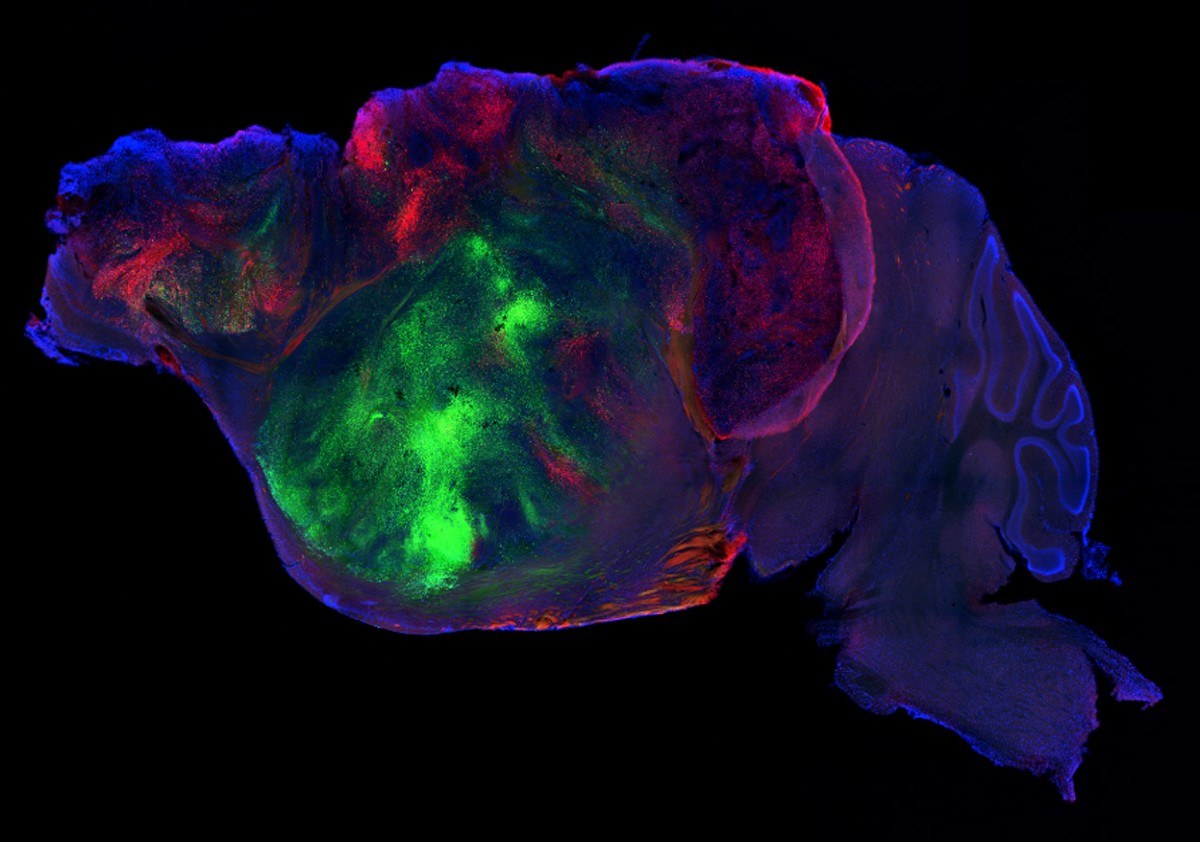
Nearly half the mouse brain volume replaced with human cortical cells, per Nature.
Stanford neuroscientist Sergiu Pașca published findings in Nature showing mice with nearly half their brain volume replaced by human cells. The mice, genetically modified to suppress cortex and hippocampus development, were implanted with human organoids that expanded to fill the available space within weeks to months.
MIT Technology Review reports the key finding: these xenocortical mice performed better on maze memory tests than the brain-deficient mice without human cells. The modified mice lacking brain tissue could walk and vocalize but failed to remember explored maze routes. The human tissue restored measurable cognitive function.
This is not an AI story in the narrow sense. But it is a research infrastructure story. Human organoid behavior, tracked at scale inside living animals, becomes a new substrate for understanding neural computation. Pașca's lab has moved from injecting organoid blobs to engineering the host brain to receive them. Watch how regulators and ethics boards respond as the line between animal model and human-adjacent tissue blurs further.
Analysis
Capability is clear. The harder question is what governance framework exists when cognition research crosses species at this scale. Regulators should care before labs outrun the rules.
Research this with your AI
Copy the research prompt into your AI assistant to see how this story affects you.
Show the prompt
I just read this AI news story and want to understand it in my own context.

Title: Stanford Grows Human Brain Cells Inside Living Mice
Summary: Stanford neuroscientist Sergiu Pașca replaced nearly half a mouse's brain volume with human cells. The xenocortical mice outperformed brain-deficient mice on memory maze tests, showing the human tissue actively shapes cognition.
Category: Research
Source: MIT Technology Review, https://www.technologyreview.com/2026/09/16/1144210/meet-a-mouse-whose-brain-cortex-is-made-up-of-human-cells/

Using my own history and context, help me understand:
1. What is the core development and why does it matter?
2. Who are the major players involved and what are their motivations?
3. How does this fit into the broader AI landscape right now?
4. How does this apply to my own work, and what should I do or watch next?

Be specific and plain spoken.
Newsletter
The day's AI stories, with the editor's take, in one email.
Free. Unsubscribe in one click.