24GB VRAM Is the Real Hardware Floor for Local AI
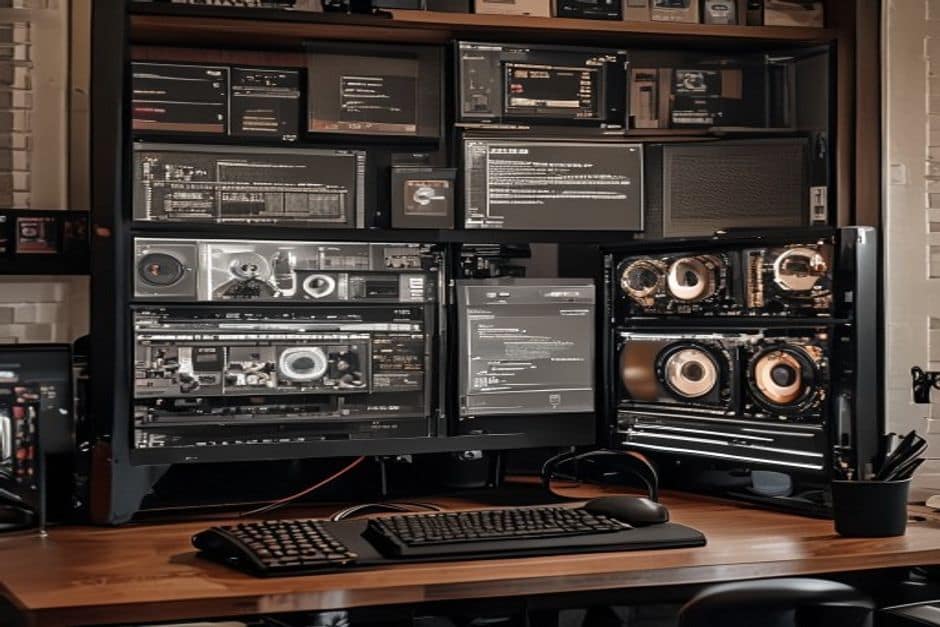
Dual RTX 4090 setups, at 48GB combined, are the power-user standard for 30B-70B models.
In a May analysis, Startup Fortune examined an r/LocalLLaMA aggregation of the 100 most popular hardware configurations logged on Hugging Face. The data shows local inference concentrated at the 24GB VRAM tier, with dual RTX 4090 setups emerging as the de facto standard for power users running 30B to 70B parameter models.
This matters because the source is deployment logs, not vendor benchmarks. When users publish model results, their hardware is recorded. That makes the Hugging Face data a ground-truth signal on what founders and practitioners are actually running. Single RTX 3090 and 4090 cards handle the accessible end, 7B to 13B models. A smaller server-grade tier, A6000 and A100 configs, covers the largest open models. Apple Silicon appears, concentrated in Mac Studio and MacBook Pro setups with 16GB to 64GB unified memory equivalents, but less prominently than community discourse implies.
For operators building on local inference, the hardware floor is now legible. A 24GB card is the entry point. Dual 4090s at 48GB combined VRAM is the serious build. Watch whether this baseline shifts as sub-24GB inference improves or as next-generation consumer cards reset the tier.
Analysis
Capability on paper versus deployment in practice: the gap closes when you read the logs, not the launch posts. The floor is 24GB. Build your cost model there.
Research this with your AI
Copy the research prompt into your AI assistant to see how this story affects you.
Show the prompt
I just read this AI news story and want to understand it in my own context.

Title: 24GB VRAM Is the Real Hardware Floor for Local AI
Summary: An r/LocalLLaMA analysis of 100 Hugging Face hardware configs shows 24GB VRAM dominates local AI deployment. Single RTX 3090 and 4090 cards handle 7B-13B models; dual RTX 4090 setups cover 30B-70B.
Category: Industry
Source: Startup Fortune, https://startupfortune.com/the-100-most-popular-local-ai-rigs-on-hugging-face-reveal-the-hardware-floor-founders-are-actually-building-on/

Using my own history and context, help me understand:
1. What is the core development and why does it matter?
2. Who are the major players involved and what are their motivations?
3. How does this fit into the broader AI landscape right now?
4. How does this apply to my own work, and what should I do or watch next?

Be specific and plain spoken.
Newsletter
The day's AI stories, with the editor's take, in one email.
Free. Unsubscribe in one click.